Your VPN Server Location Is Not a Random Choice — And Picking the Wrong One Could Hand You to a Foreign Government
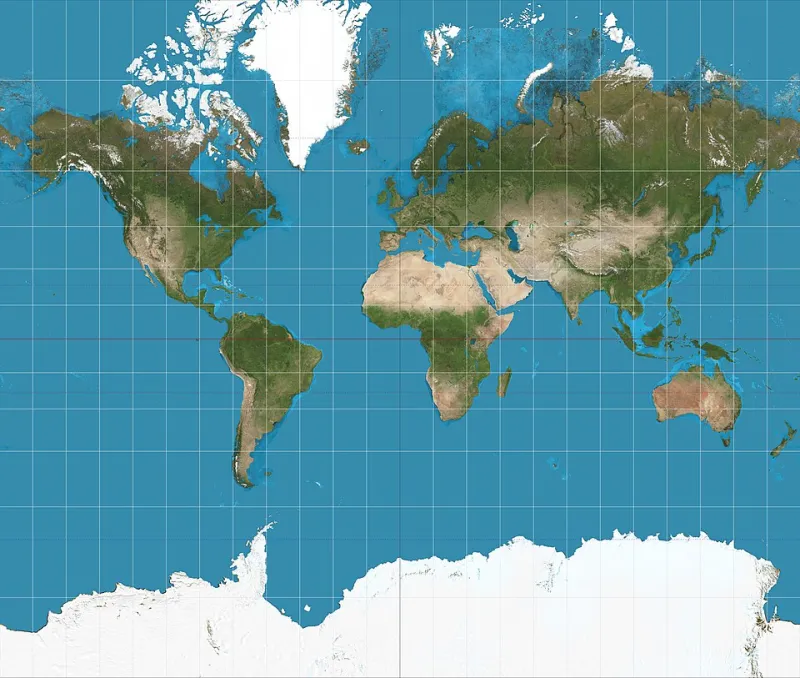
Photo: Strebe, CC BY-SA 3.0, via Wikimedia Commons
There's something that feels almost rebellious about routing your internet traffic through a server in another country. You're in Kansas City, but as far as the internet is concerned, you're in Amsterdam. Or Tokyo. Or, if you're feeling adventurous, Moscow.
Here's the problem: that sense of digital adventure can come with some very real legal and surveillance consequences that most VPN marketing copy never bothers to mention. The country your traffic passes through isn't just a dot on a map — it's a legal jurisdiction with its own surveillance laws, data retention rules, and government access policies. And some of those jurisdictions are far more hostile to your privacy than your own living room.
The Illusion of Distance
When you connect to a VPN server, your traffic is encrypted between your device and that server. That part is real. But once your data leaves that server and heads out to the broader internet, it's operating under the laws of whatever country that server sits in. Your VPN provider might be incorporated in Panama and market itself as a "no-logs" service, but if their physical servers are sitting in a data center in Chennai or St. Petersburg, local law can compel that data center to cooperate with authorities — sometimes without even notifying the VPN company.
This isn't a hypothetical. In 2017, Russia mandated that VPN providers operating servers within its borders register with the government and block access to prohibited content. Several major providers quietly pulled their Russian servers rather than comply. The ones that didn't? Their users were effectively routing traffic through infrastructure the Russian government had leverage over.
India took a similar swing in 2022, requiring VPN companies to store user data — including names, IP addresses, and usage patterns — for five years and hand it over on government request. Again, several reputable providers responded by removing their Indian servers entirely. But not all of them did. And users who didn't read the fine print kept connecting to those servers, assuming they were protected.
The Five Eyes, Nine Eyes, and Why Jurisdiction Matters
US-based privacy advocates often talk about the "Five Eyes" alliance — the intelligence-sharing agreement between the United States, United Kingdom, Canada, Australia, and New Zealand. The concern is that a VPN based in any of these countries might be subject to secret data requests that get shared across borders.
That's a legitimate concern. But it's worth pointing out that Five Eyes countries at least operate under established legal frameworks with some degree of judicial oversight, public accountability, and press freedom. You can argue about whether those protections are sufficient, but they exist.
Contrast that with countries like China, where the concept of a legal challenge to a government surveillance request is essentially fiction. Or Belarus, where the government has demonstrated a willingness to force aircraft out of the sky to arrest dissidents. Routing your traffic through a server in one of these countries because the speed looked good in a benchmark test is a trade-off most users aren't consciously making.
Virtual Servers: The Hidden Wrinkle
There's another layer to this that even experienced VPN users often miss: virtual server locations. A VPN app might show you a flag for Brazil or South Africa, but the physical server could actually be sitting in a completely different country. The "location" you're connecting to is simulated for the purposes of IP geolocation — your traffic is actually processed somewhere else entirely.
Some providers are transparent about this. Many are not. If your VPN app shows a server in Ukraine but the physical hardware is hosted in Germany, you get German legal protections. That's actually fine. But if that Ukrainian server flag is masking infrastructure in a country with aggressive surveillance laws, you're getting a false sense of geographic security.
The only way to know for sure is to dig into your provider's documentation, look for independent audits, or use tools like traceroute to get a rough sense of where your traffic is actually going.
Countries to Think Twice About
This isn't about geopolitics or picking favorites — it's about data protection law and government surveillance infrastructure. When evaluating server locations, US users should approach the following with extra scrutiny:
Russia and Belarus: Both have mandatory data localization laws and government access requirements that are essentially incompatible with genuine no-logs VPN operation. If your provider still lists servers here, ask why.
China: VPNs are technically illegal for unauthorized use in China, and any VPN infrastructure operating there is subject to the country's sweeping cybersecurity and national intelligence laws. There's no realistic scenario where a server in China offers meaningful privacy protection.
India: Post-2022 regulations require VPNs to collect and retain substantial user data. Reputable providers left. If a server is still listed as India-based, it's worth asking whether that provider complied with the mandate.
Turkey and UAE: Both have histories of using telecommunications infrastructure for political surveillance, particularly targeting journalists and activists. These aren't countries where data protection laws offer meaningful user recourse.
Hong Kong: Once considered a privacy-friendly jurisdiction separate from mainland China, Hong Kong's 2020 national security law effectively brought it under Beijing's legal umbrella. Treat Hong Kong servers the same as mainland Chinese servers.
So Where Should You Actually Connect?
For US users prioritizing genuine privacy, the strongest server locations tend to be in countries with robust data protection frameworks and a track record of resisting overbroad government access requests. Iceland, Switzerland, and the Netherlands consistently rank well on these metrics. Germany and Sweden have strong legal protections, though they're Nine Eyes members, which is worth factoring in depending on your threat model.
If you're just trying to access region-locked streaming content or get a local IP for a specific country, the surveillance risk calculation changes — a brief connection to a Japanese server to watch a show is different from routing all your sensitive communications through that server indefinitely.
The key is intentionality. Know why you're connecting to a specific location. Understand what legal protections exist (or don't) in that country. And don't assume that because your VPN provider offers a server somewhere, they've done the legal due diligence to make that server safe for your use case.
Questions Worth Asking Your VPN Provider
Before you trust a server location with your traffic, it's reasonable to ask:
- Are your servers in this country physical hardware or virtual instances hosted elsewhere?
- Has your provider received and complied with government data requests from this jurisdiction?
- Did your provider remove servers from countries like India or Russia when new surveillance mandates took effect — and if not, why?
- Has your infrastructure been independently audited, and does that audit cover server locations specifically?
A provider that can't or won't answer these questions clearly is telling you something important about how much they actually value your privacy.
The Bottom Line
A VPN is only as private as the legal environment its servers operate in. The encryption between your device and the server is real — but it's only half the equation. The other half is what happens to your traffic, your metadata, and your connection logs once they touch a server in a country that may have very different ideas about who deserves access to that information.
Choosing a server location isn't just a performance decision. It's a privacy decision. Treat it like one.